
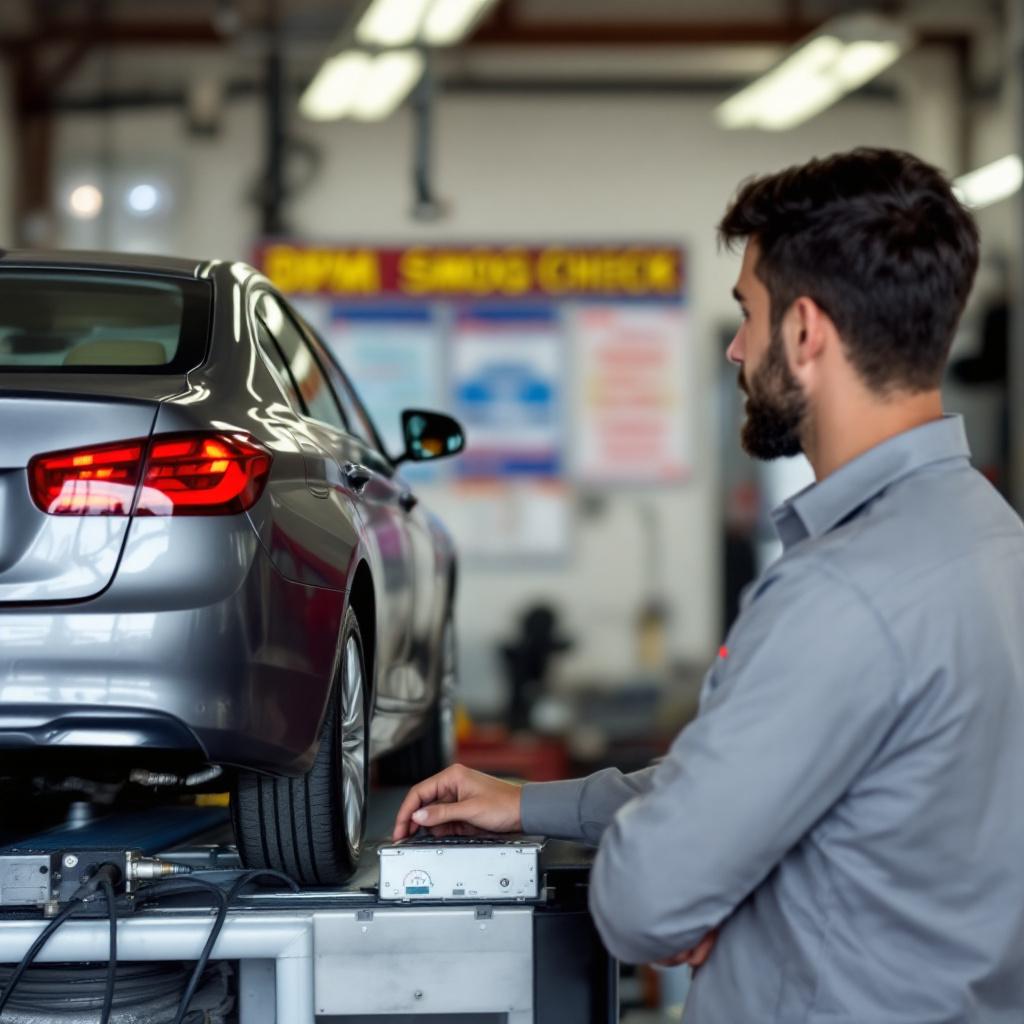

California dealer smog certificate requirements are a core DMV dealer test topic and a daily retail compliance issue. In most qualifying used-vehicle retail sales, a California dealer must make sure a valid Smog Check certificate is available at or before delivery—not after the customer complains, not after registration is delayed, and not as an informal “we owe” item.
For dealer compliance, the safest habit is simple: decide whether the vehicle needs certification before advertising or contracting, verify any exemption in writing, and keep proof in the deal file. That discipline helps reduce DMV discipline risk, registration delays, and consumer rescission arguments.
When California Dealers Must Provide a Smog Certificate
DealerEducator training emphasizes that a dealer generally must provide a valid Smog Check certificate to the buyer at or before delivery when selling a covered vehicle at retail. Covered vehicles commonly include:
- Gasoline-powered vehicles model year 1976 or newer.
- Diesel-powered vehicles model year 1998 or newer with a gross vehicle weight rating of 14,000 pounds or less.
- Hybrid vehicles, because they are not treated like fully electric vehicles for Smog Check exemption purposes.
California Vehicle Code section 24007 ties dealer sales to required emission-control compliance, and California Health and Safety Code provisions govern Smog Check certification and exemptions. In practice, a dealer should not treat “we can smog it later” as a compliant retail delivery process when a certificate is required.
Common Smog Certificate Exemptions Dealers Should Know
Exemptions are useful, but they must be applied carefully. An exemption that works for one transaction may not work for a different buyer, use, vehicle type, or registration situation.
| Scenario | Dealer compliance takeaway |
| Dealer-to-dealer or wholesale transfer | Smog certification is generally not required for qualifying transfers between licensed dealers or wholesale channels, but the file should show the buyer’s licensed-dealer status. |
| Sale for dismantling or wrecking | The transaction should clearly support dismantling or wrecking use. Do not use this exemption for a vehicle actually intended for ordinary retail road use. |
| Off-highway use | Document the intended off-highway use and avoid relying on this exemption when the deal facts show normal on-road consumer use. |
| Four-year transfer exemption | Vehicles four model years old or newer may be exempt from transfer Smog Check requirements, with the applicable transfer fee handled through registration processing. |
| Recent passing test | A passing Smog Check certificate is generally valid for 90 days for transfer purposes. Keep evidence of the certificate date and result. |
| Vehicle-type exemptions | Examples include gasoline vehicles 1975 model year or older, fully electric vehicles, motorcycles, and certain heavier or older diesel vehicles. |
Why “Recent Test” Does Not Mean “Any Old Smog”
A common audit problem is relying on an expired or poorly documented inspection. A recent-test scenario works only if the passing certificate is still valid for the transaction. DealerEducator course materials teach that Smog Check certificates are generally valid for 90 days for transfers. If the certificate is outside that window, the dealer should obtain a new passing certificate unless a separate exemption clearly applies.
Dealers should also distinguish between a certificate obtained for a specific transfer and a vehicle sitting in inventory. Course materials note that dealer-issued certificates may remain valid for a longer inventory period while the vehicle remains in dealer inventory, but the deal file should still confirm that the certificate supports the final retail delivery.
Documentation: What to Keep in the Deal File
Smog compliance is not only about passing the test; it is about proving the dealership made the right decision before delivery. A clean file should allow a manager, DMV investigator, or customer-service employee to understand why the vehicle was delivered with a certificate or why no certificate was required.
Recommended deal-file proof
- Copy or printout of the passing Smog Check certificate, showing date, VIN, and result.
- Vehicle year, make, model, VIN, fuel type, and GVWR when relevant.
- Written note identifying the exemption relied on, if no certificate was required.
- For dealer-to-dealer transactions, proof the buyer was a licensed dealer or auction channel.
- For dismantling, wrecking, or off-highway sales, documents consistent with that limited purpose.
- Purchase contract itemization for any permitted smog inspection or certificate charges.
- Manager sign-off before delivery when the transaction depends on an exemption.
Practical Smog Compliance Checklist for California Dealers
- Confirm the vehicle’s model year, fuel type, and GVWR before sale.
- Ask whether the transaction is retail, wholesale, dealer-to-dealer, dismantling, or off-highway.
- For retail sales, assume a certificate is required unless a specific exemption applies.
- Check whether the vehicle is gasoline 1976 or newer, or diesel 1998 or newer at 14,000 pounds GVWR or less.
- Verify whether a four-year transfer exemption applies; do not guess based only on calendar year.
- If relying on a recent passing test, confirm the certificate is still within the valid transfer period.
- Do not deliver a required-smog vehicle with only a promise to complete the inspection later.
- Keep the certificate or exemption proof in the deal file.
- Have a second employee review borderline exemptions before contracting.
- Train sales and F&I staff to escalate smog questions before delivery, not after funding or registration submission.
Dealer Test Tip: Spot the Retail Delivery Problem
For the CA DMV dealer test, focus on the transaction facts. A 1999 diesel truck at 13,000 pounds GVWR sold at retail is very different from a 1975 gasoline vehicle, a fully electric vehicle, or a vehicle transferred to another licensed dealer. The test often turns on whether the vehicle is covered, whether the buyer is a retail consumer, and whether a valid exemption or current certificate exists.
Compliance Risk: DMV Discipline and Consumer Claims
Delivering a vehicle without a required Smog Check certificate can create more than a registration inconvenience. DealerEducator training warns that violations may support DMV administrative action, fines, and possible sales-contract rescission arguments. The best prevention is a written, repeatable process: certificate first, exemption proof second, delivery last.


